
We want to tell you about partforge, and we want to be concise (because attention spans), but comprehensive (because the details are actually pretty cool).
So, here’s the TLDR: our company, Pixite, is a small team that typically makes creative apps for broad audiences. But when our lead developer, Scott, started dabbling with making robotic arms in his free time (yes, we know, he is very cool), he got frustrated with the learning curve for the CAD needed in 3D printing, and he decided to make a user-friendly webtool that allows you to design and adjust parts in real time, using AI.
Basically, if you have a part in mind, you can type what you want, and partforge will generate an adjustable 3D rendering. Something look off? Tell it what you want, and it’ll tweak it. You can also upload a photo or sketch. When it’s ready, you can print it.
That’s not all: Your project becomes its own “forge” and joins partforge’s collection of open source forges that can be iterated upon in the community – license permitting.
Which agent is the best at 3D rendering? We’ve got numbers for ya
While creating partforge, Scott ran a bunch (like, a bunch) of tests to see which agent handled vision, tool use and 3D geometry the best. He ran 54 tasks through five agents with 675 attempts in all. Each attempt was graded on whether it successfully built, on measured geometry, and on a checklist an AI judge answered from the renders.
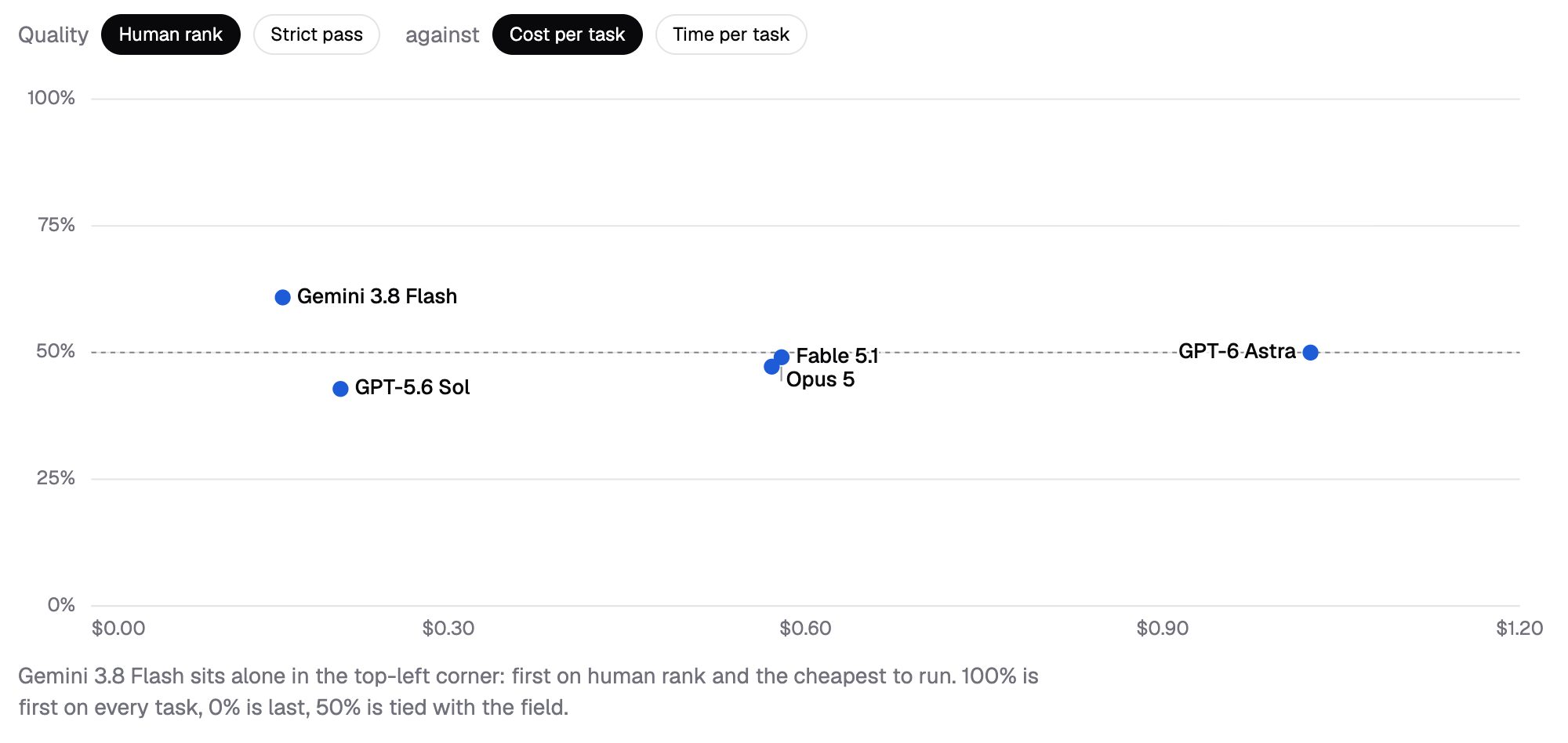
The winner…Gemini 3.8 Flash. Gemini 3.8 Flash was ranked highest by the human judges (yes, there were some human-AI judge disagreements) – it’s fast, affordable, and produces solid results. We got pretty deep into the experiment, and you can read more about that here.
Come play
Come try partforge out! Make something cool, without spending a ton of time wrangling CAD.